




[Urgent Diagnosis] Addressing Crypto Regulatory Risks: Joint Guidelines from the SEC and CFTC May Have Implications for the Global Derivatives Market
03
02
01

Hello! BrokerConfirm is your trusted choice for a proper foreign exchange trading platform.

Today, we have prepared an unprecedented news that would be welcomed by investors in virtual assets worldwide, as well as global foreign exchange (FX) and derivative traders alike. Namely, the news that the two giant financial regulatory agencies of the United States, the SEC (Securities and Exchange Commission) and the CFTC (Commodity Futures Trading Commission), have reached a historic agreement to put an end to the 'crypto regulation war' that has dragged on for over 10 years.

"Let’s now delve into the details of this groundbreaking statement: "Most cryptocurrencies are not securities,” and how this will change the macro economy and the flow of capital in Wall Street; and also what new avenues of income creation will open up for individual traders like us.

Longbeno01

Historic agreement between the U.S. SEC and the CFTC: "Most cryptocurrencies are not securities"

The long-standing regulatory uncertainty that has plagued the global cryptocurrency market and traditional global financial markets has finally reached a historic turning point.
The U.S. Securities and Exchange Commission (SEC) and the Commodity Futures Trading Commission (CFTC) have jointly released an official interpretation through a statement and guidelines stating that "most cryptocurrencies (Crypto Assets) do not qualify as securities.".
This is a significant declaration that fundamentally eliminates the 'regulatory risk" that has been hindering global investors and virtual asset innovators for the past decade or so, and it is no different from opening a formal highway for the giant capital of Wall Street to safely enter the cryptocurrency market.
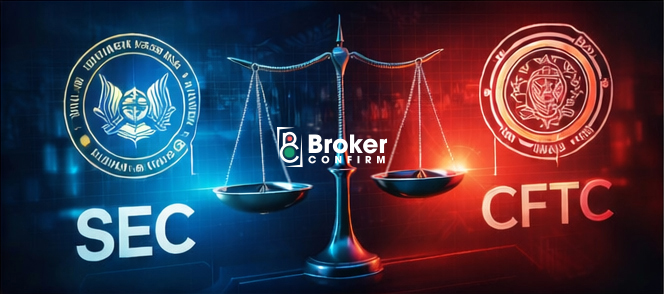
This joint statement goes beyond the mere superficial agreement between the two key regulatory agencies to provide a very concrete and unified standard for how U.S. federal law should be applied to the entire digital asset ecosystem.
In particular, by clearly defining the legal boundaries for when specific tokens will be transformed from the shackles of 'securities' into legitimate 'commodities," they have removed the biggest obstacle that had previously prevented institutional investors from fully entering the market.
The fact that the SEC and the CFTC, the major regulatory authorities that govern the orderly functioning of global financial markets, have fully synchronized their regulatory approaches for the development of the blockchain industry will have a tremendous impact on the global foreign exchange and derivative markets as a whole in the future.


 

02

Conflict between the Howey Test and the Commodity Exchange Act (CEA), and a new harmony

Until now, the US regulatory environment for virtual assets has been plagued by severe confusion due to the differing jurisdiction interpretations and approaches of the two regulatory agencies.
The SEC applied a strict standard by classifying tokens sold through initial coin offerings (ICOs) as securities based on the 'Howey Test', which defines them as investments that involve the expectation of profit or income.
By contrast, the CFTC has classified major cryptocurrencies with sufficiently decentralized networks as 'commodities" under the Commodity Exchange Act (CEA), and has largely regulated trading in derivative markets.
These contradictory standards have caused serious legal confusion for market participants.


But through this historic agreement, the two institutions have finally given the market the unified voice it so desperately wanted.
SEC Commissioner Paul Atkins emphasized that "after more than a decade of terrible uncertainty, this joint interpretation will provide market participants with a very clear understanding of how the commission will treat and regulate virtual assets under federal securities laws.".
Furthermore, the past administration officially acknowledged that "most virtual assets are not securities in and of themselves.".
CFTC Commissioner Michael Selig also praised the decision as providing the clarity long awaited by innovators and investors, and confirmed that the CFTC will apply the Commodity Exchange Act in a harmonized manner in line with the SEC’s approach.

01

Clarified criteria for cryptocurrency classification and complete resolution of regulatory uncertainties

The key aspect that investors should pay the most attention to in this joint guidance from the SEC and the CFTC is the official introduction of a 'transparent and systematic digital asset classification system'.
Now, a preliminary and clear classification criteria has been established for various types of digital assets, such as Commodities, Collectibles, Utility Tokens, Stablecoins, and traditional securities.

What is even more important and groundbreaking is that it has legally officially recognized the 'fluid transition" of asset character.
The guidelines stated that, even if virtual assets are not securities per se, they can be part of an investment contract and therefore be subject to the securities laws, and how they can subsequently be excluded from that category.
Once the initial investment contract relationship ends, the relevant token provides a legal basis for removing the heavy burden of securities.
This is a direct result of directly addressing the legal gray area in which the industry has operated since the launch, under the threat that the token could be considered a security.


Ending regulation by enforcement and accelerating capital inflow

The dark era of so-called 'regulatory enforcement" that reigned supreme over the US cryptocurrency market and eroded industry innovation is finally coming to a complete end.
Without clear and transparent guidelines in advance, the way in which the market was controlled through post-event litigation has decreased.
This measure significantly reduces the risk of inconsistent treatment of the same assets that have defined the US market and the possibility of regulatory intervention through enforcement.
This is also in line with legislative efforts related to market structures and stablecoins, such as the GENIUS Act being proposed by the U.S. Congress.

This fundamental change in the regulatory paradigm will serve as the trigger that opens the door for large institutional funds to pour into the cryptocurrency market.
The SEC has already led the way in institutional adoption by allowing options trading in 11 Bitcoin and Ethereum spot ETFs and relaxing some banking regulations.
As most cryptocurrency projects have been removed from the fatal risk of unregistered securities, institutional investors have been able to more safely manage large amounts of capital through regulated brokers and listed products.


BrokersConfirms View: Volatility in the Derivatives Market and Opportunities for Traders

This historic regulatory settlement by the SEC and the CFTC is by no means merely a limited benefit for the cryptocurrency market itself.
This is a 'mega-sized megamoment' that shakes the entire structure of the global foreign exchange (FX) trading and the derivative (CFD) ecosystem and exponentially increases the pie.
BrokersConf strongly believes that this matter will open up unprecedented opportunities for profit-making for individual margin traders and global regulated brokers alike.

First, the ecosystem of safe and legal virtual asset derivatives (CFD) trading will explode in size.
Brokers subject to Tier 1 regulations have, in the past, been reluctant to offer various altcoins due to regulatory risks originating from the United States.
However, with the establishment of global standard guidelines, reputable brokers are now able to pour the market with CFD products for Bitcoin, Ethereum, as well as promising altcoins and tokenized assets without any restrictions.
This means that traders have overwhelming liquidity and entry opportunities 365 days a year.

In conclusion, in the upcoming era of financial integration, the key to enabling traders to generate continuous profits is to carefully select 'genuine regulatory-compliant brokers' that can provide a seamless server and stable liquidity for a wide range of virtual asset derivatives.
Our broker comparison service maintains a cold, unbiased view that is not biased towards any particular broker, and we rigorously verify the 'true top-tier brokers' that protect our clients' valuable funds to help you trade successfully.


Activation of intellectual property tracking and protection by BrokerConfirm / Used for legal use.
